
MeasureCamp Sydney 2026: More AI, more data, but are we measuring what matters?
From AI governance and smarter analytics to a senior executive turning her family into a measurement experiment, MeasureCamp Sydney 2026 offered a timely reminder that better technology doesn’t always mean better decisions.
In summary
- AI is making work easier, but there’s a trade-off. One discussion questioned whether we’re losing some of the learning and collaboration that comes from working through problems with other people.
- Some of the most useful AI applications are quite simple. At Atlassian, the examples were about keeping projects organised, checking research and reducing the time teams spend on administration.
- Governance is still causing headaches. The six-week wait for approval of a small Copilot application got people talking about how organisations can protect sensitive information without holding up every new idea.
- It’s worth paying attention to BigQuery costs. A few changes to how tables are structured and queries are written can save money without needing to overhaul the whole analytics environment.
- And perhaps don’t turn your family into a marketing experiment. Helen managed to improve her household KPIs, but the results weren’t quite what she’d hoped. A good reminder that hitting a target and achieving a better outcome aren’t always the same thing.
Beyond the AI hype
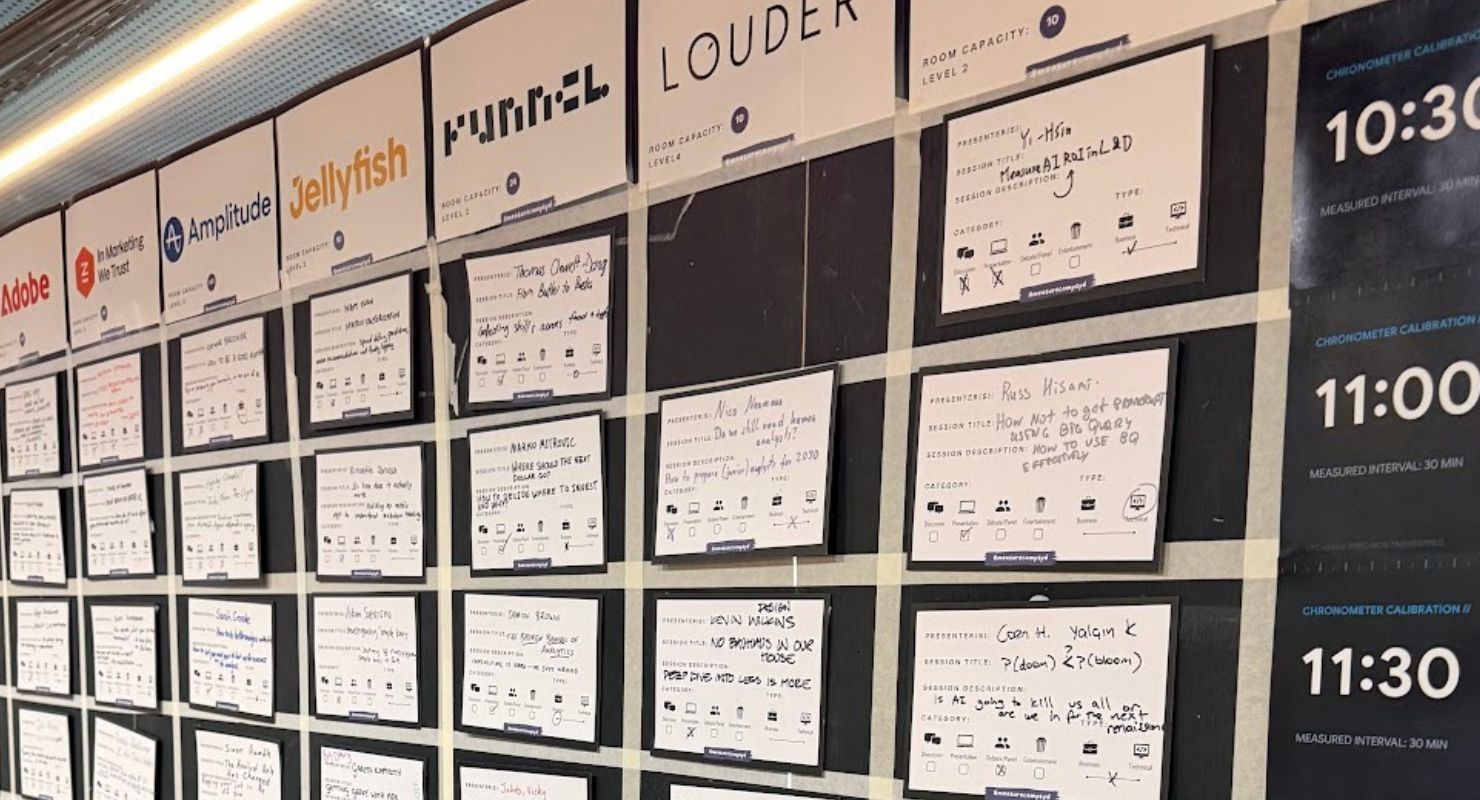
AI was always going to be a big part of MeasureCamp Sydney 2026, held at Google’s Sydney headquarters last Saturday. But there was plenty else on the agenda, with more than 35 sessions covering everything from data engineering and measurement to AI governance.
That’s the appeal of MeasureCamp. There isn’t a traditional conference programme. Attendees put their own sessions forward on the day, and you never quite know what conversations you’ll end up in.
We couldn’t get to everything, but a few sessions caught our attention.
Are we forgetting how to think for ourselves?
One discussion got people talking about how much our working habits have changed since AI became part of the everyday toolkit.
The speaker remembered when analysts would ask someone in the team for help, put a question to an industry forum or spend time working through a problem themselves.
These days, it’s often easier to ask Gemini or ChatGPT.
And why wouldn’t you, particularly when you’re busy and need an answer quickly?
What concerned the speaker was how much of the thinking we’re starting to hand over. There’s a difference between using AI to help solve a problem and accepting an answer without really understanding how it got there.
AI can be very good at telling us what we want to hear. It can produce a convincing answer, even when that answer is wrong. And if everyone is using similar tools to generate ideas, there’s a fair chance we’ll start seeing a lot of the same thinking.
There was also concern about people coming into the industry. If junior analysts can skip the difficult parts of the job, how will they learn to recognise a problem when something doesn’t look right?
It wasn’t an anti-AI conversation. The concern was more about what we might lose if we stop working through problems ourselves or asking other people for their perspective.
What AI is actually helping with
A session from a data leader at Atlassian offered a different perspective, with some practical examples of where AI is saving teams time.
Much of it came down to the everyday work involved in managing projects.
Meeting transcripts can be used to put together proposals. AI agents connected to Slack and Jira can help track what teams are working on, keep records updated and pick up potential delays.
There was one example I particularly liked.
When reviewing research, the speaker uses AI to search for previous studies or internal analysis that might contradict the team’s findings.
Rather than asking AI to confirm the work is correct, they’re asking it to find reasons it might not be.
Interestingly, the speaker had found that AI wasn’t particularly good at replacing the conversations people have when they’re developing ideas. Getting a few colleagues together still produced better results.
The same went for managing people. AI might pick up that a project is falling behind, but someone still needs to find out what’s happening and have that conversation.
And when it comes to presenting findings to senior stakeholders, there’s more involved than pulling together the information. You need to understand what the results mean, what matters to the business and what you’re recommending.
The examples weren’t about automating an entire team. They were about taking some of the administration out of the day so people could spend more time on the work that needed their attention.
The problem with AI governance
Another session brought together people from government, education and private industry to talk about how their organisations are managing AI.
There were some fairly different experiences.
One attendee had spent six weeks waiting for approval to publish a small Copilot application. When someone finally reviewed the request, they questioned why approval had been needed at all.
Others were working with student records and patient information, where the risks were considerably higher and the need for proper controls wasn’t really up for debate.
A participant working with medical imaging described how AI was helping radiologists prepare reports more quickly. They said reporting was around 50% faster, with radiologists still reviewing the results and remaining responsible for the final reports.
It was interesting hearing these examples in the same room.
On one hand, organisations want their teams to experiment with AI and find useful applications. On the other, people can find themselves caught in lengthy approval processes before they’ve even had a chance to test an idea.
One suggestion was to give teams more freedom to build and test small prototypes, with more formal checks before anything is made available more widely.
There obviously isn’t one set of rules that will work for every organisation. But there was plenty of agreement that governance needs to reflect the risks involved, rather than treating every experiment as though it carries the same consequences.
BigQuery and the cost of getting it wrong
Not everything at MeasureCamp was about AI.
One of the more useful technical sessions looked at how easily costs can get out of hand in Google BigQuery.
The speaker got into some of the mistakes that can make data processing more expensive than it needs to be.
One was running queries across entire tables when you only need a small amount of the information. Another was keeping multiple copies of large datasets without much thought about the storage costs.
There was also a point about using LIMIT in a query. Just because you’ve asked BigQuery to return fewer rows doesn’t mean it’s processed less data. You can still end up paying for a much larger scan.
The speaker shared a few ways to keep costs under control, including partitioning and clustering tables, selecting only the columns you need and checking how much data a query is likely to process before running it.
There was also discussion about when streaming data makes sense and when batch processing might be a cheaper option.
Nothing especially complicated, but useful advice for teams working with growing datasets.
What happens when you measure your family like a marketing campaign?
One of the day’s highlights came from a senior marketer, whose presentation took out the award for best creative talk.
It was easily one of the funniest sessions we attended, although I suspect her family might have a slightly different view of the experiment.
Helen decided to apply marketing measurement principles to her household for a week.
She began by asking the audience what the most important KPI for a family should be.
People called out suggestions, from getting everyone fed and making appointments on time to keeping on top of the housework.
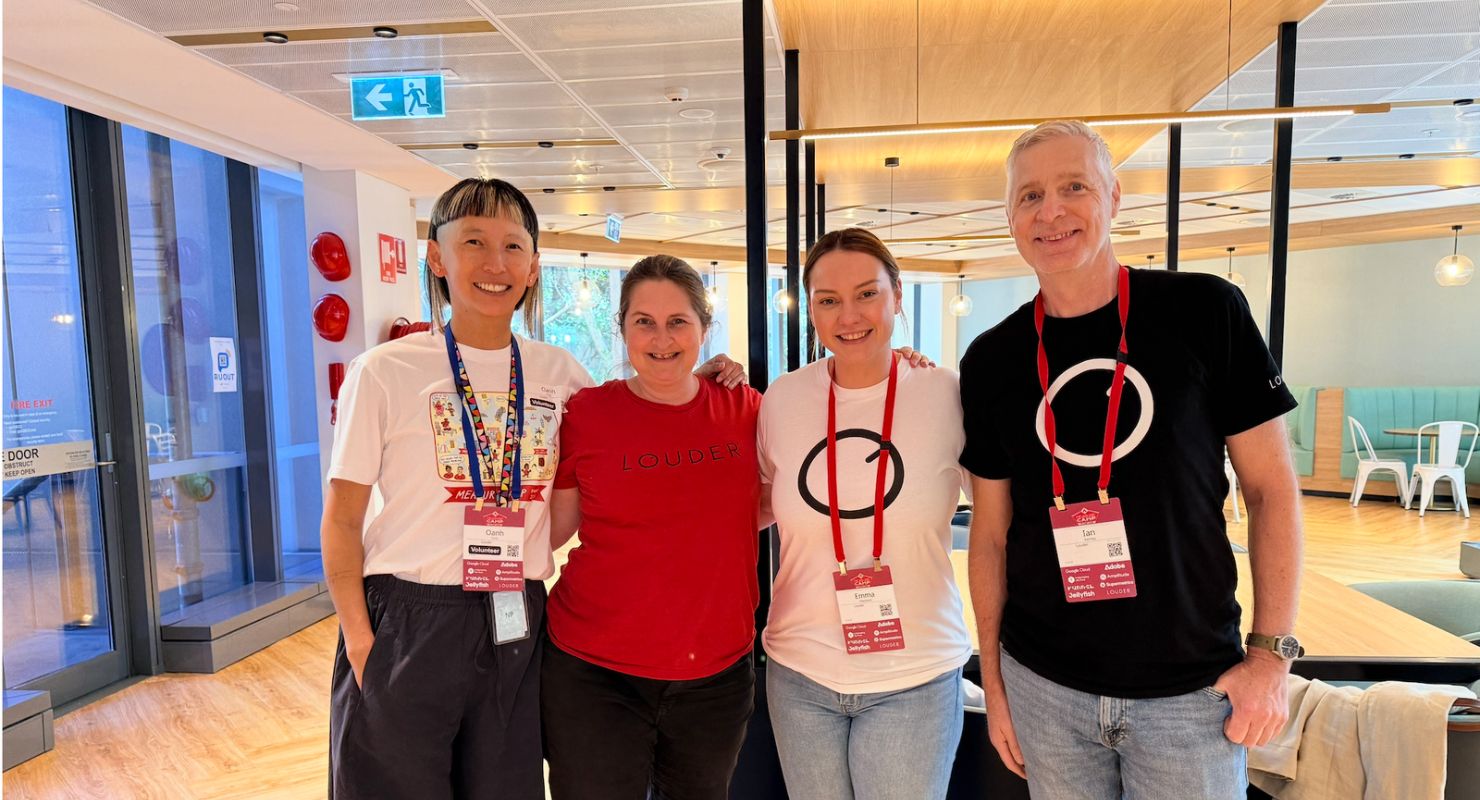
Louder’s Oanh Trinh called out happiness.
As it turned out, that was exactly what Helen was trying to measure.
She had gone considerably further than simply asking her family whether they were happy.
She’d created dashboards, a family engagement funnel, a household happiness index and even a Net Promoter Score for her husband.
The first problem she wanted to solve was getting someone to empty the dishwasher.
She tried reminders, creating urgency and offering rewards. Ice cream turned out to be the most effective incentive.
Her youngest daughter, Emma, collected 79% of the rewards.
Unfortunately, complaints from her older sister, Caitlyn, went up by 500%.
The dishwasher was being emptied, but the household wasn’t necessarily running any more smoothly.
Her husband was even less enthusiastic about the exercise.
After being repeatedly surveyed, his feedback included: “I don’t believe our marriage requires quarterly business reviews, Helen.”
What made the session so good was how Helen took something familiar from marketing and applied it to everyday family life, where the flaws became pretty obvious.
She could show improvements in the numbers. There were more shared meals, more hugs and more participation in household chores.
But being constantly monitored wasn’t making her family any happier.
She also shared a Hyundai example involving someone who entered a promotional competition 48,000 times.
It’s a pretty good illustration of what happens when you reward a particular action without thinking too much about why someone is doing it.
The same questions apply to marketing. We might be generating more leads, but are they the right people? Are those extra clicks resulting in sales? And are we giving too much credit to one interaction when there were several things influencing the customer’s decision?
Helen finished with a line that summed it up nicely: “Not everything that matters can be measured and not everything we measure matters.”
I think most of us left that session thinking about our own dashboards. And possibly our dishwashers.
What we took away from MeasureCamp
One thing that struck me about this year’s MeasureCamp was how much of the conversation had shifted.
Last year, there was a lot of excitement about analysts becoming builders and finding new ways to use AI. This year, at least in the sessions we attended, people were talking more openly about the limitations.
Some were finding genuinely useful ways to get work done faster. Others were questioning whether we’re becoming too dependent on the tools. And the governance discussion showed that businesses are still trying to work out how to give people room to experiment without creating unnecessary risks.
The BigQuery session was a good reminder that there’s plenty of value in improving the technology and processes we already have.
And Helen’s presentation managed to make a serious point about measurement while getting the whole room laughing.
For us at Louder, a lot of this comes back to the conversations we have with clients about what they’re measuring and why.
There’s no shortage of data available to marketers. The harder part is knowing which information is useful, what it actually tells you and whether the decisions being made from it are improving business performance.
That’s what makes MeasureCamp worth attending. You hear what people are trying, where they’re running into problems and what they’ve learned along the way.
And if Helen’s family experiment taught us anything, it’s that sometimes the most useful thing a dashboard can tell you is that you’re measuring the wrong thing.
Louder is a proud supporter of the data and analytics community and regularly attends the monthly Data and Analytics Wednesday meetup.
Get in touch
Get in touch with Louder to discuss how we can help your business improve its measurement and analytics capabilities, and sign up to our newsletter for the latest industry insights.

About
Emma Shepherd
Emma is the Editorial and Communications Lead at Louder. When she’s not writing or editing, she’s out walking her dog, Bronx, taking a Pilates class, or tracking down the city’s best Sunday roast.